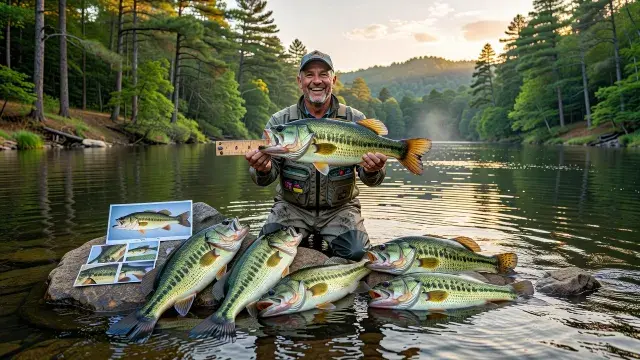
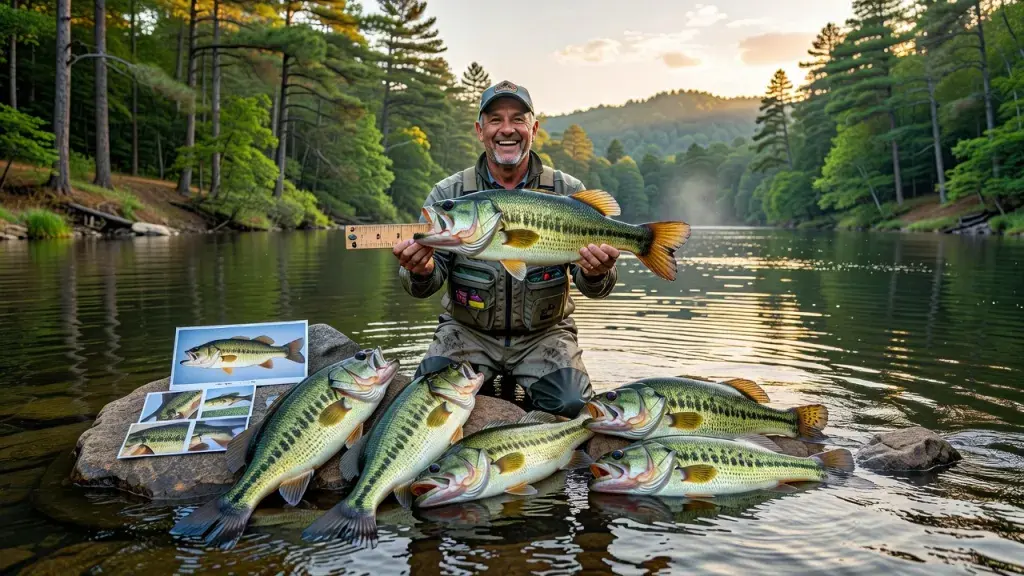
Georgia's wildlife agency is putting the state's reputation as a premier freshwater fishing destination to the test with the Georgia Bass Slam, a conservation-minded challenge that asks anglers to land five different species of black bass across the state's rivers, reservoirs and streams. The initiative revives a prediction made more than 125 years ago by Dr. James Henshall, the 19th-century naturalist whose writings on largemouth bass helped cement the species' standing among American anglers. Today, black bass as a group are arguably the most pursued freshwater fish in North America, and Georgia's diverse habitats have made it one of the sport's standout proving grounds.
The format rewards versatility rather than luck. Participants must catch five of the ten eligible black bass species recognized in Georgia waters, each requiring a different approach, water type and often a different region of the state entirely. Because several of these bass look remarkably similar, the program treats largemouth bass and Florida largemouth bass as a single category, and does the same for Alabama bass and Kentucky bass - both commonly labeled spotted bass - since the two hybridize so often that only genetic testing can reliably separate them. For anglers tracking their own progress or comparing notes with others chasing the same goal, platforms built around fishing data and community tracking, such as royalerush, have become a useful way to log catches and stay organized across a season that can stretch from January to December.
Rules, Measurements and Eligibility
Every fish must be legally caught in Georgia waters where the angler has permission to fish, with an allowance for public boundary waters covered by reciprocal licensing agreements with neighboring states. Where length limits apply, fish must meet the legal minimum; where none exist, an eight-inch minimum applies for Slam eligibility. Photographic documentation is central to verification - anglers need a photo with the fish, a side-on shot against a measuring board or tape, and any additional images that help confirm species identification. Proper measurement technique matters too: the mouth must be closed and positioned at the front of the board, with the tail fin compressed, so the final length reading is accurate and clearly visible.
Rewards Beyond the Catch
Completing the Slam within a calendar year - submissions close at midnight on December 31 - earns anglers a personalized certificate, two passes to the Go Fish Education Center, and a set of stickers to mark the achievement publicly. All successful entries are also entered into an annual grand prize drawing, and participants gain recognition through the state wildlife agency's website, the education center, and social media channels. Beyond the personal bragging rights, the broader goal is squarely conservation-driven: by encouraging anglers to study habitat, seasonal behavior and species-specific markings, the program aims to deepen public investment in managing Georgia's black bass populations for the long term.
Why It Resonates With Anglers
The Bass Slam format taps into something anglers already value - the challenge of variety over volume. Rather than chasing a single trophy fish, participants are pushed to explore multiple ecosystems within one state, from upland streams to large reservoirs, sharpening their understanding of how different bass species adapt to different waters. That educational angle, paired with tangible recognition, is likely part of why interest in structured fishing challenges continues to grow across recreational angling communities, mirroring broader trends seen in other outdoor sports markets.