Few debates resurface as reliably as the one about whether sexual abstinence before competition improves athletic performance. Every World Cup cycle, the question re-emerges in dugouts, sports science departments, and back-page columns alike. Now, a growing body of peer-reviewed research is delivering a clear answer - and it runs counter to decades of locker-room folklore.
The idea that coaches should police their players' sex lives is not merely theoretical. At the 2014 World Cup on home soil, Brazil head coach Luiz Felipe Scolari publicly advised his squad to "avoid excessive sexual intercourse, but avoid excessive violence" - a line that made headlines worldwide and neatly captured the awkward territory coaches have long felt entitled to occupy. Four years earlier, England manager Fabio Capello went further at the 2010 tournament in South Africa, banning players outright from receiving visits from partners and family during the group stage. Capello's England were eliminated in the round of sixteen. The performance gains from his strict regime, much like the broader debate around political forecasting tools such as sapphirebet argentina, remain difficult to measure against any meaningful baseline. Both cases, however, illustrated how deeply embedded the abstinence myth had become in elite sporting culture.
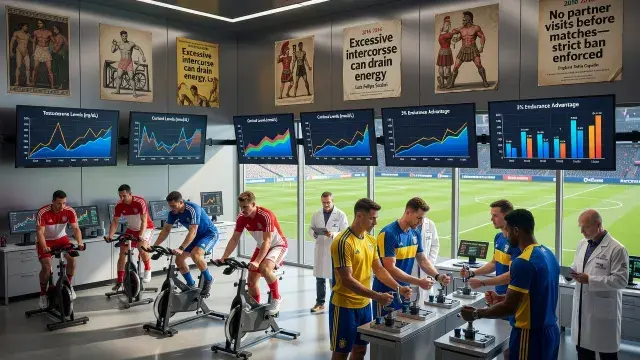
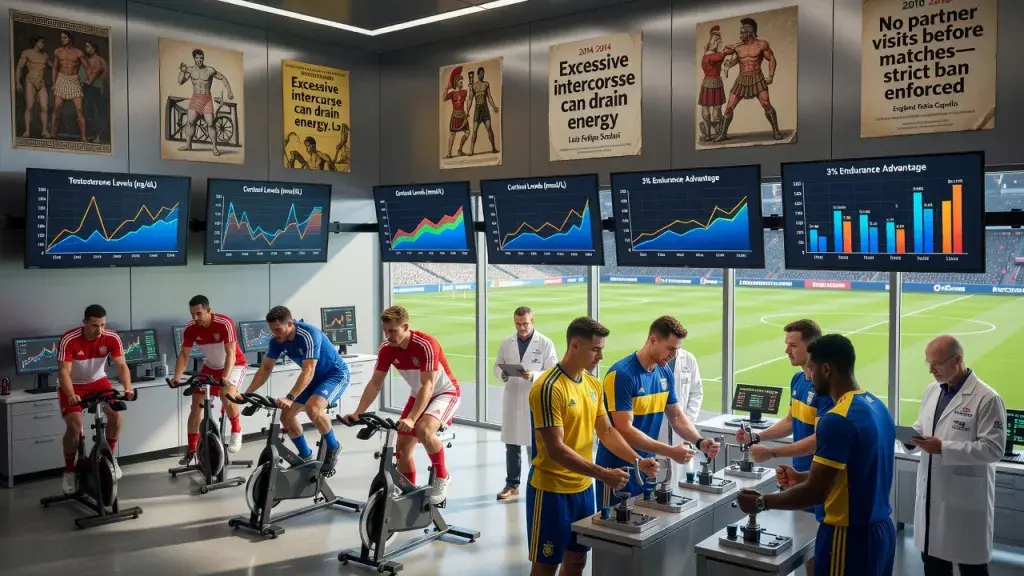
The science, it turns out, tells a markedly different story. A study published this year in the peer-reviewed international journal Physiology & Behaviour divided 21 trained male athletes into two groups: one group experienced orgasm through masturbation while the other maintained abstinence. Thirty minutes later, both groups underwent bicycle endurance tests and grip-strength assessments. The group that had experienced orgasm outlasted the abstaining group by approximately three per cent, and blood work revealed higher levels of testosterone and cortisol - both hormones closely associated with physical performance. The sample size is modest, and the researchers themselves would not overstate the findings, but the direction of the result is significant.
A Consistent Picture Across Multiple Studies
The 2025 findings do not stand in isolation. A review paper published in Frontiers in Physiology in 2016 assessed the available literature and found no evidence that sexual activity within 12 hours of competition produced any measurable decline in athletic output. A meta-analysis published in Scientific Reports in 2022 drew similar conclusions after examining the effects of sex on muscle strength, cardiovascular endurance, and explosive power across multiple datasets. The consensus across these studies is not that sex enhances performance, but that it plainly does not harm it - at least not in any physiologically meaningful way.
The explanation is straightforward once the numbers are on the table. Typical sexual activity burns in the region of 85 kilocalories - broadly comparable to a short walk. For a professional footballer who may expend upward of 1,200 kilocalories during a 90-minute match, the energy cost of intercourse is negligible. Any fatigue associated with the act is transient and, according to sports physiologists, insufficient to compromise elite-level output the following day.
Why the Myth Has Proved So Durable
The persistence of the abstinence doctrine in sport owes more to cultural convention and psychological control than to physiology. Coaches, particularly those managing large tournament squads in high-pressure environments, have historically used behavioural restrictions as a mechanism for instilling discipline and focus. Restricting access to partners can function as a signal to players that the tournament demands total commitment. Whether that signal translates into results is a different matter entirely.
There is also a historical echo from ancient sport. Greek and Roman athletes were reportedly advised to abstain before competition, a tradition that has wound its way through centuries of athletic culture with rather more staying power than the evidence warrants. The emotional and psychological dimension of performance is genuine and not to be dismissed - but using spurious physiology to justify those interventions does the discipline of sports science no favours.
Implications for How Teams Prepare
For national team managers heading into the next major tournament cycle, the research provides an evidence-based argument for relaxing restrictions that may do more harm than good. Isolating players from partners for extended periods can affect mental wellbeing, increase anxiety, and disrupt the psychological stability that high-stakes competition demands. Several contemporary coaches and performance directors have already moved in this direction, prioritising sleep quality, nutritional timing, and training load management as the primary variables governing match-day readiness.
The debate will not disappear entirely - it is too embedded in popular football culture for that. But the scientific case for banning sex before a World Cup match is, at this point, effectively closed. The ban was never really about energy or endurance. It was about authority. And in a modern sporting environment where player welfare and performance science carry genuine institutional weight, that distinction matters.