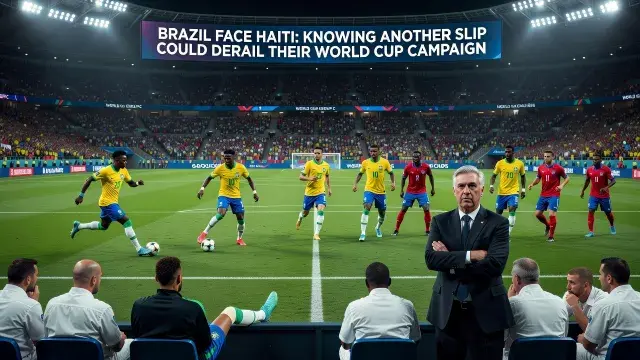
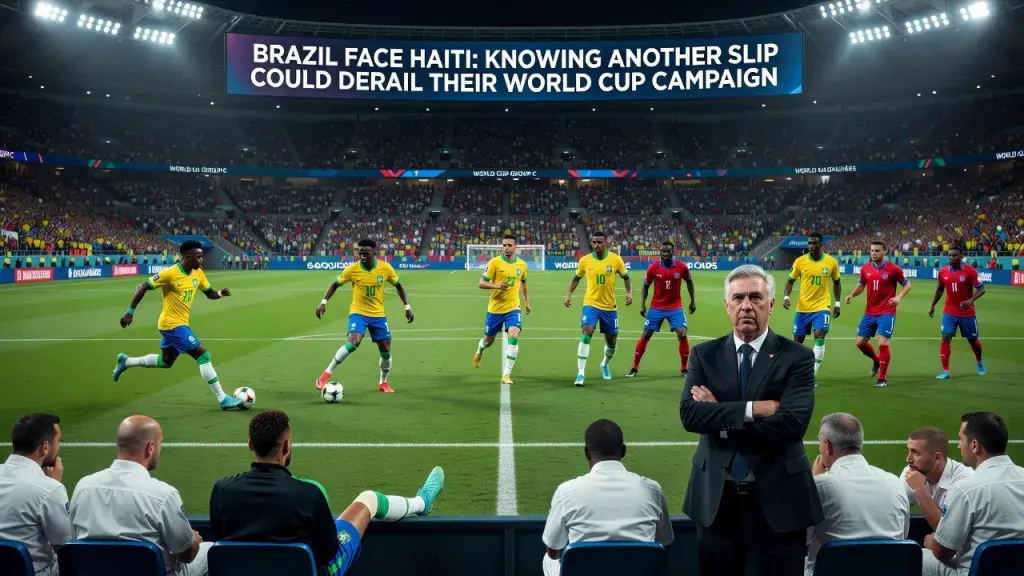
A nation that has lifted the World Cup five times arrives at matchday two of Group C carrying the uncomfortable weight of underperformance. Brazil's 1-1 draw with Morocco on June 13 was more than a dropped point - it was a public exposure of structural problems that Carlo Ancelotti cannot afford to ignore. Standing in their way next is Haiti, ranked 82nd in the world, a side built on collective resilience and genuine individual quality in key positions, who lost narrowly 1-0 to Scotland in their own opener and will arrive with nothing to lose and everything to fight for.
The stakes in Group C are sharper than many anticipated. Both sides sit third in the standings heading into matchday two, which means that regardless of the chasm in squad depth and global pedigree, Brazil genuinely need a result, and Haiti know a point or better would represent one of the tournament's early defining upsets. The context of this fixture - two teams scrapping for position after opening stumbles - lends it a tension that goes beyond the expected mismatch on paper. Readers who enjoy a wide range of sports markets may have already browsed everything from football match lines to best floorball betting odds this week, but in terms of tournament drama, it is hard to look past what this fixture could deliver in Group C.
Ancelotti's Concerns Mount as Neymar Remains Sidelined
The biggest story surrounding Brazil before a ball is kicked remains the fitness of Neymar. The 32-year-old's return to the World Cup stage after a two-and-a-half-year international absence was one of the tournament's most anticipated storylines, but a muscle edema sustained with Santos has clouded everything. Ancelotti has confirmed that the medical staff are managing his recovery individually, keeping him in the squad bubble while shielding him from match action, at least for now. The expectation is that he will not feature in the group stage, though updates are due closer to kick-off.
Without Neymar, the attacking responsibility falls squarely on Vinicius Junior and Raphinha. Ancelotti has spoken publicly about Raphinha's ability to attack deep space, and the Barcelona forward is expected to operate in an advanced, flexible midfield role - a position that made him devastating for his club last season. Vinicius brings his usual blend of direct running, unpredictability and finishing threat. The concern is in front of them and behind them simultaneously: Morocco exposed the centre of the pitch repeatedly in the opener, with an ageing midfield trio unable to consistently impose Brazil's rhythm or protect a central defence in which even the accomplished Marquinhos and Arsenal's Gabriel Magalhães looked uncertain at times. Bruno Guimarães was Brazil's most dynamic presence in that midfield, and his influence on the tempo here will be critical.
Haiti Are More Than Just Opponents Making Up the Numbers
It would be a mistake - and frankly an insult to the football Haiti have played under Sébastien Migné - to treat this as a training exercise for the Seleção. Since taking charge in June 2024, Migné has engineered a remarkable transformation in a side that operates in extraordinarily difficult circumstances. He has never been able to set foot in Haiti itself due to the country's deep political unrest, yet he has built genuine cohesion and tactical discipline from a distance. That speaks to both the man's methods and the character of the players who have bought into his vision.
Those players deserve individual recognition. Jean-Ricner Bellegarde was one of the few bright spots for Wolves during a Premier League season that ended in relegation - his energy, pressing and technical quality in central midfield mark him as a player capable of disrupting any opponent. Wilson Isidor, deployed as Haiti's main attacking outlet from Sunderland, offers pace and intelligent movement that can unsettle high defensive lines. And Ruben Providence, the 24-year-old winger who came through at PSG and Roma before establishing himself in the Netherlands with Almere City, is the kind of player who can create something from nothing in one-on-one situations. Veteran goalkeeper Johnny Placide, still performing at a professional level with Bastia, will be fundamental to any rearguard effort.
History and Form Point One Way, But Context Complicates It
The head-to-head record between these two nations is, bluntly, a statement of football's global hierarchy. Brazil beat Haiti 7-1 at Copa America 2016 and 6-0 in a friendly back in 2004 - thirteen goals scored, one conceded across two meetings. That historical weight is undeniable. Recent form also favours Brazil: two wins and a draw from their last five, with thirteen goals scored in total, even if their single defeat against France in March hinted at the same vulnerability Morocco then exploited. Haiti's recent record - one win from five, including defeats to Peru and Tunisia - reflects the gap in resources, not necessarily in determination or tactical structure.
What makes this fixture genuinely interesting is that Brazil's problems are real and not merely cosmetic. An ageing midfield, a fragile defensive shape, and a reliance on individual brilliance rather than collective fluency have been laid bare at this tournament already. Haiti will not press as aggressively as Morocco, but Migné's side are disciplined, physically committed and possess enough quality in transition to make life uncomfortable. For Brazil, a routine win would calm nerves and buy Ancelotti breathing room. Anything less, and the conversation about this Seleção's readiness for the knockout rounds becomes significantly louder.